
The publications of the HotBio students
-
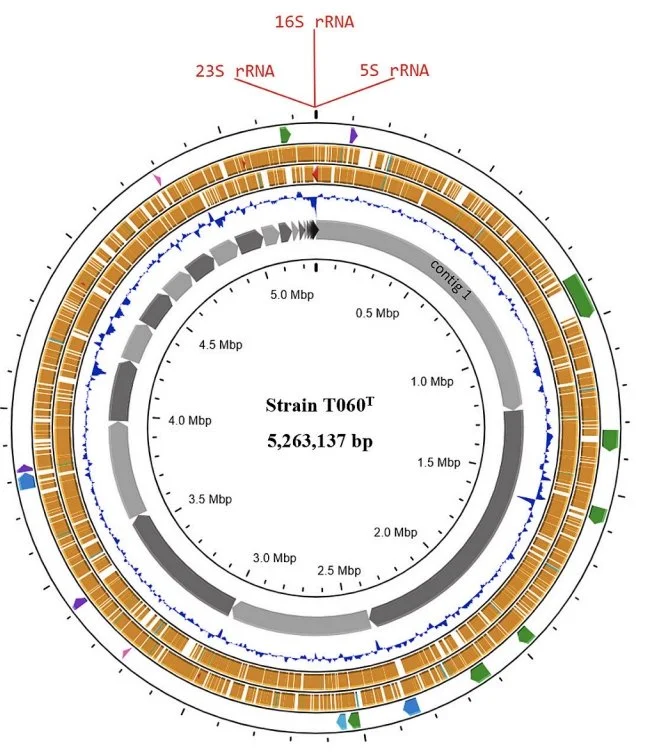
ESR1 Kim van Wezel and ESR6 Elaine Romines: Rhodococcus dendrobeaniae sp. nov., an actinomycete isolated from an Arctic marine invertebrate exhibiting cytotoxic activity, and an emended description of Rhodococcus sovatensis
A polyphasic study was conducted to establish the taxonomic status of strain T060T, an orange, aerobic, coccoid and non-motile actinomycete, isolated from a marine bryozoan (Dendrobeania sp.) collected in the Barents Sea.
Phylogenetic analysis of the 16S rRNA gene sequences revealed Rhodococcus sovatensis DSM 102881T as the closest related species to strain T060T with a similarity of 99.54%. Phylogenomic analysis confirmed a close relationship between T060T and R. sovatensis DSM 102881T, while supporting their distinction. Digital DNA-DNA hybridization and average nucleotide identity values between strain T060T and R. sovatensis DSM 102881T were 26.4 and 84.3%, respectively, supporting the delineation of the isolate as a new species. Genomic characterization of the assembled genomes of T060T and R. sovatensis DSM 102881T showed genome sizes of 5.3 and 4.2 Mbp, with a G + C content of 64.38 and 65.01%, respectively.
Genome analysis of strain T060T identified 15 biosynthetic gene clusters (BGCs) with low sequence similarity to known BGCs, indicating its capacity to produce unknown, potentially bioactive secondary metabolites. Furthermore, growth of T060T in eight different media revealed condition-dependent cytotoxic activity. The strongest cytotoxicity was observed for fractionated extracts from T060T grown in half-strength ISP 2 with filtered seawater against the human malignant cell lines MCF7 and A2058, and to a lesser extent against the non-malignant MRC5 cell line, highlighting its biotechnological potential. Based on the data from polyphasic taxonomy studies, it is proposed that strain T060T be classified in the genus Rhodococcus as Rhodococcus dendrobeaniae sp. nov. Additionally, the acquired data of R. sovatensis were used to amend its original description.
van Wezel, K.; Romines, E.M.; Hansen, K.Ø.; Andersen, J.H.; Hansen, E.H.; Golińska, P.; Schneider, Y.K.H. Rhodococcus dendrobeaniae sp. nov., an actinomycete isolated from an Arctic marine invertebrate exhibiting cytotoxic activity, and an emended description of Rhodococcus sovatensis. Syst. Appl. Microbiol. 2026, 49, 126755 https://doi.org/10.1016/j.syapm.2026.126755.
-
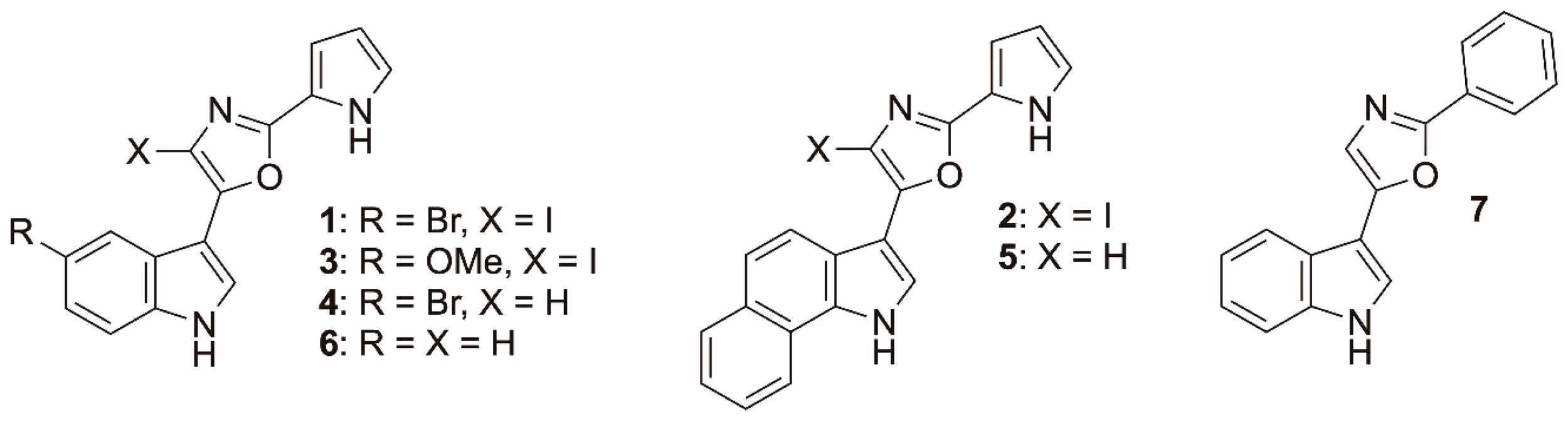
ESR9 Martin Heimböck: Inhibition of Staphylococcus epidermidis Biofilm Formation by a Synthetic Breitfussin Analogue
Bacterial biofilms pose a major public health challenge by increasing the antimicrobial tolerance in pathogenic bacteria, thereby limiting the effect of medication-based treatment and promoting the development of antimicrobial resistance. Hence, there is a need to discover new molecules with the ability to prevent biofilm formation.
We screened seven synthetic analogues of the breitfussin family of natural products for antimicrobial and antibiofilm activity using a broth microdilution and crystal violet method, respectively. Two compounds inhibited the growth of Gram-positive bacteria in their planktonic state at concentrations of 50 µM, of which one compound (2) demonstrated the ability to inhibit the biofilm formation of Staphylococcus epidermidis at sub-growth-inhibitory, low micromolar concentrations. Compound 2 did not inhibit biofilm growth in Staphylococcus aureus or Listeria monocytogenes, or the ability to eradicate pre-established biofilms.
Initial Mode of Action (MoA) studies with compound 2 against S. epidermidis showed a modest impact on the cell surface hydrophobicity and early-stage adhesion to polystyrene.
These findings highlight the breitfussin framework as a promising scaffold for the development of new antimicrobial and antibiofilm agents
Heimböck, M.P.; Hansen, K.Ø.; Guttormsen, Y.; Pandey, S.K.; Johnsen, E.; Haug, B.E.; Bayer, A.; Sanchez, P.; Petit, G.A.; Hansen, E.H.; et al. Inhibition of Staphylococcus epidermidis Biofilm Formation by a Synthetic Breitfussin Analogue. Microbiol. Res.2026, 17, 105. https://doi.org/10.3390/microbiolres17060105
-
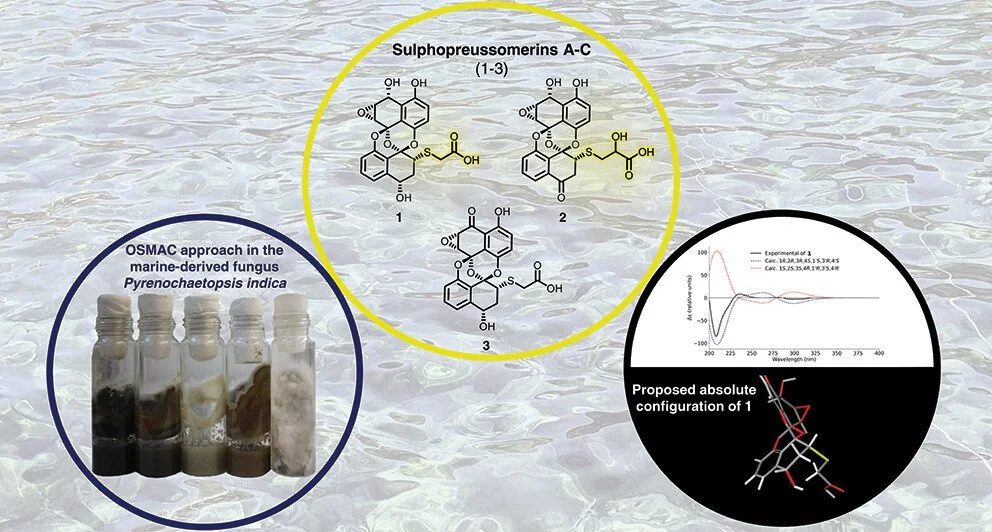
ESR3 Georgia Karyofyllidou: Sulphopreussomerins: Sulfur-Containing Preussomerins Isolated from the Marine-Derived Fungus Pyrenochaetopsis indica
The organic extract of Pyrenochaetopsis indica CF-301929, a fungal strain collected from the Coral Sea in Australia, showed broad-spectrum activity against the fungal phytopathogens Zymoseptoria tritici, Colletotrichum acutatum, Fusarium proliferatum, and Magnaporthe grisea.
After extensive purification, five compounds were isolated, including three new sulfur containing preussomerinsalong with two previously described molecules, ascochytatin and preussomerin G.
The new compounds incorporate rare thioglycolic or 2-hydroxy-3-mercaptopropionic acid moieties in their structures, and they represent the first members of a new class of preussomerins that we have named sulphopreussomerins. Multiple spectroscopic analyses, including HRESIMS and 1D/2D NMR experiments were used to elucidate their structures while the proposed absolute configuration of compound 1 was assigned by comparison of the experimental and theoretical ECD spectra.
When tested against a fungal phytopathogen panel, preussomerin G exhibited, as previously reported, strong antifungal activity and cytotoxicity, whereas sulphopreussomerin A and ascochytatin showed moderate antifungal activity against Z. tritici with no detectable cytotoxicity.
Karyofyllidou, G.; Serrano, R.; González-Menéndez, V.; Martín, J.; Mackenzie, T.A.; Ramos, M.C.; Ortega-Vidal, J.; Thomas, O.P.; Tormo, J.R.; Genilloud, O.; Reyes, F. Sulphopreussomerins: Sulfur-Containing Preussomerins Isolated from the Marine-Derived Fungus Pyrenochaetopsis indica. J Nat Prod 2026, https://doi:10.1021/acs.jnatprod.6c00324
-
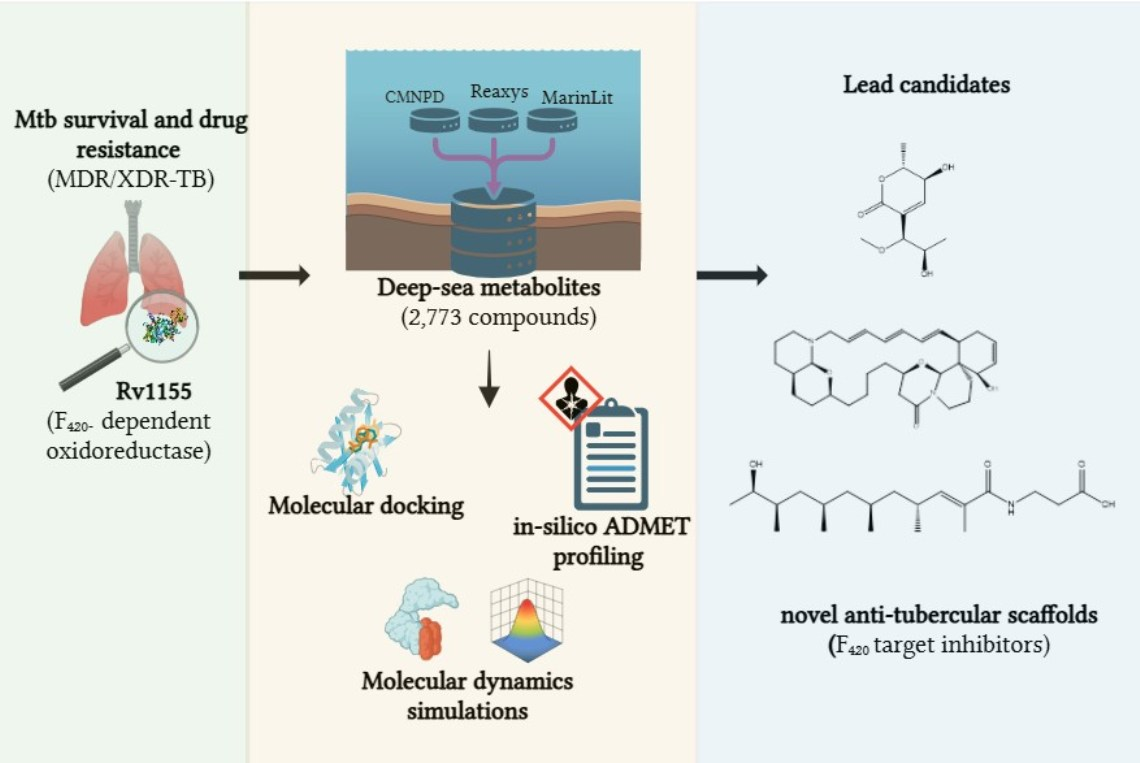
ESR2 Ria Desai: Deep-Sea Marine Metabolites as Promising Anti-Tubercular Agents: CADD-Guided Targeting of the F420-Dependent Oxidoreductase
Tuberculosis (TB), caused by the bacterium Mycobacterium tuberculosis, remains a major global health challenge, especially with the rise of multidrug-resistant (MDR-TB) and extensively drug-resistant (XDR-TB) strains. To address this, Ria has been looking for new marine natural products with unique mechanisms of action. This study focuses on deep-sea marine compounds as potential inhibitors of a key enzyme in TB survival, called Rv1155.
Using advanced computer-based methods, Ria and her colleagues screened 2,773 marine-derived compounds from various chemical databases. She identified 68 compounds with strong potential to bind to Rv1155, narrowing the list down to three promising candidates: Upenamide, Aspyronol, and Fiscpropionate F. Among these, Upenamide showed the strongest and most stable binding to the enzyme, while Aspyronol demonstrated excellent drug-like properties.
This study highlights the potential of deep-sea metabolites as a source of new TB treatments and provides a cost-effective framework for further research. These findings could pave the way for experimental validation and the development of novel drugs targeting drug-resistant TB.
Desai, R.; Alaroud, A.A.; Preet, G.; Astakala, R.V.; Ebel, R.; Jaspars, M. Deep-Sea Marine Metabolites as Promising Anti-Tubercular Agents: CADD-Guided Targeting of the F420-Dependent Oxidoreductase. Mar. Drugs 2026, 24, 58. https://doi.org/10.3390/md24020058
-
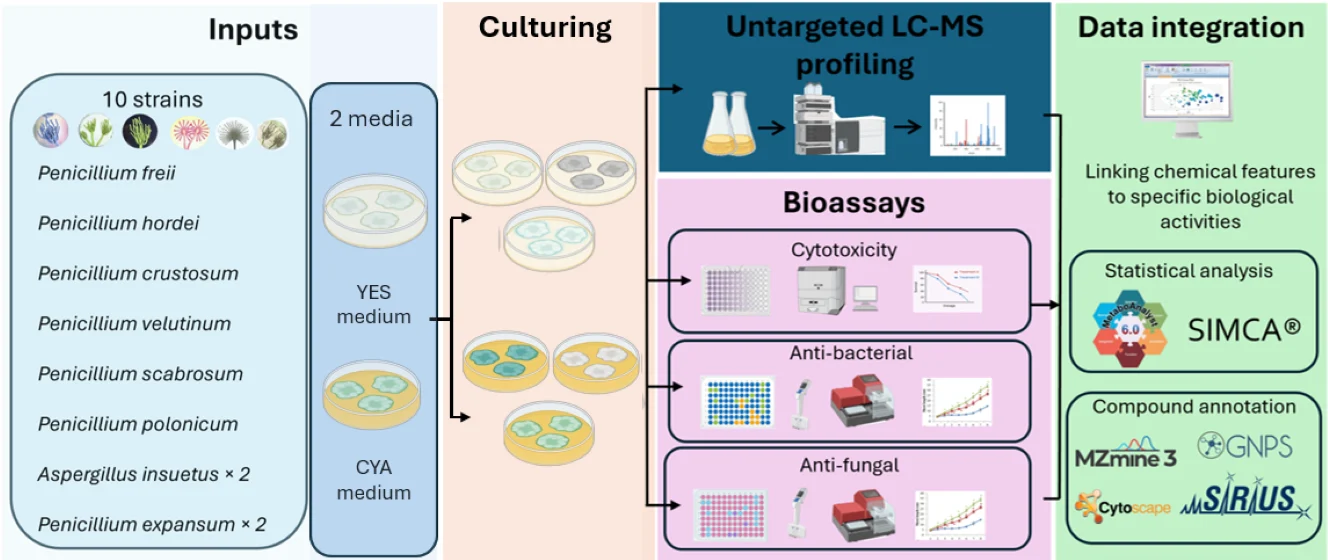
ESR2 Ria Desai: An Exploratory LC-HRMS Metabolomics Study of Culture Medium-Dependent Metabolic Variation and Bioactivity in Ten Fungal Strains
Fungi represent a prolific source of structurally diverse secondary metabolites, yet the extent to which culture conditions reshape the metabolic profile and functional bioactivity remains incompletely understood.
In this exploratory study, ten fungal strains belonging to genera Penicillium and Aspergillus were cultivated in Yeast Extract Sucrose (YES) and Czapek Yeast Autolysate (CYA) media and analysed using untargeted LC-HRMS metabolomics. The objective of this study was to evaluate how culture medium influences metabolic profiles and to investigate medium-dependent metabolic variation and its relation to cytotoxic, antibacterial, and antifungal activities.
Global metabolic profiling revealed moderate but statistically significant medium-associated metabolite variation, with discriminant metabolites predominantly enriched under CYA conditions. Putative structural annotation suggested patterns consistent with differential regulation of isoprenoid-derived sterols, terpenoids, alkaloid-like metabolites, and aromatic polyketides. While antimicrobial activities displayed a heterogeneous, strain-dependent pattern with limited correlation to individual metabolites, cytotoxic activity co-varied with metabolite composition in OPLS regression modelling. Sterols and terpenoid-related features emerged as major contributors to cytotoxicity. Given the absence of biological replication and the limited sample size inherent to this pilot study, all findings should be considered hypothesis-generating and interpreted within an exploratory framework.
These results suggest that nutrient composition influences biosynthetic pathway activation while functional outcomes remain strongly dependent on strain-specific metabolic capacity. This work provides a systematic framework and targeted hypothesis for future investigations into condition-dependent fungal chemical diversity in natural product discovery.
Desai, R.; Preet, G.; Astakala, R.V.; Romero-Otero, A.; Sanchez, P.; Mackenzie, T.A.; Larsen, T.O.; Ebel, R.; Jaspars, M. An Exploratory LC-HRMS Metabolomics Study of Culture Medium-Dependent Metabolic Variation and Bioactivity in Ten Fungal Strains. Int. J. Mol. Sci. 2026, 27, 3866. https://doi.org/10.3390/ijms27093866